
فارسی
Behsoshafa logo

How to Swim or Shower with a Fiberglass Cast Bandage (Complete Care Guide)

Fiberglass casting tape is lighter and more radiolucent than POP, yet water exposure can still harm the undercast padding and skin. This practical guide explains when and how you may shower—and, where medically permitted, swim—with a fiberglass cast, what’s safe, and what to avoid. (Educational content; does not replace your clinician’s advice.)
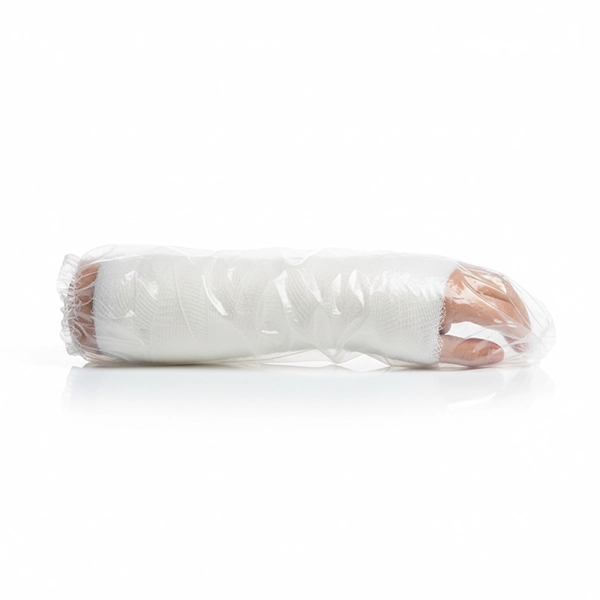
Fiberglass forearm cast protected with a dedicated waterproof shower cover on a white background

First Principles: Is Showering/Swimming Allowed?

  • Safety first: Fiberglass tolerates water better than POP, but skin and padding are usually not waterproof—water ingress risks irritation, odor, infection, and loss of immobilization quality.
  • Showering with a proper waterproof cast cover and lukewarm water is generally feasible—provided no leakage occurs.
  • Swimming (pool/sea) only with physician approval, a dedicated submersion-rated cover, and strict time limits. Hot tubs are discouraged.

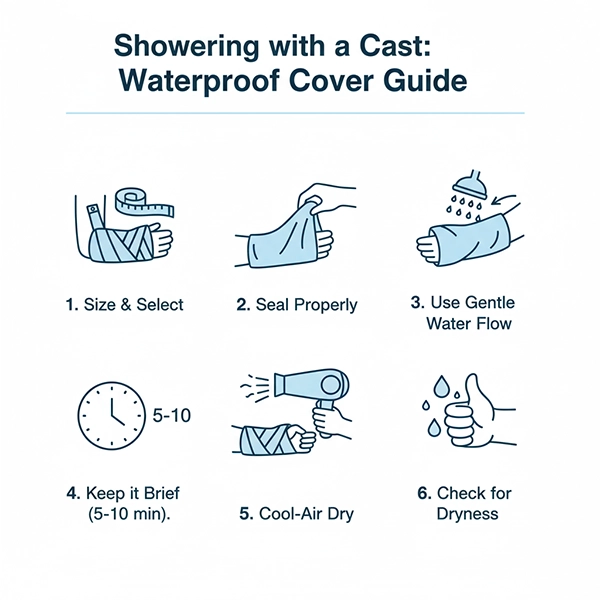
Step-by-step infographic on using a waterproof cast cover safely for showering

Safe Showering with a Fiberglass Cast (Step-by-Step)

  1. Choose the right cover: correct size, intact seals; inspect before each use.
  2. Dry prep: ensure the cast/skin around it are dry for better sealing.
  3. Lukewarm, gentle flow: avoid prolonged spraying onto the seal area.
  4. Keep it brief: preferably < 10–15 minutes.
  5. After shower: remove the cover, pat-dry the surface, and use cool air to evaporate residual moisture.

Swimming with a Fiberglass Cast: Conditions & Limits

  • Medical clearance: some fractures/incisions preclude immersion for a period.
  • Submersion-rated cover: test the seal before entering water.
  • Short sessions: even with a cover, keep immersion brief and dry promptly afterward.
  • Avoid heat/pressure: no hot tubs; avoid strong waves or deep dives.

What Not to Do

  • Do not submerge the cast without a proper waterproof cover.
  • Avoid makeshift solutions like plastic bags and tape.
  • Do not use hot air to dry the cast.
  • Do not insert objects under the cast to scratch.

If the Cast Gets Wet

  1. Exit water and pat-dry the surface with a towel (no rubbing).
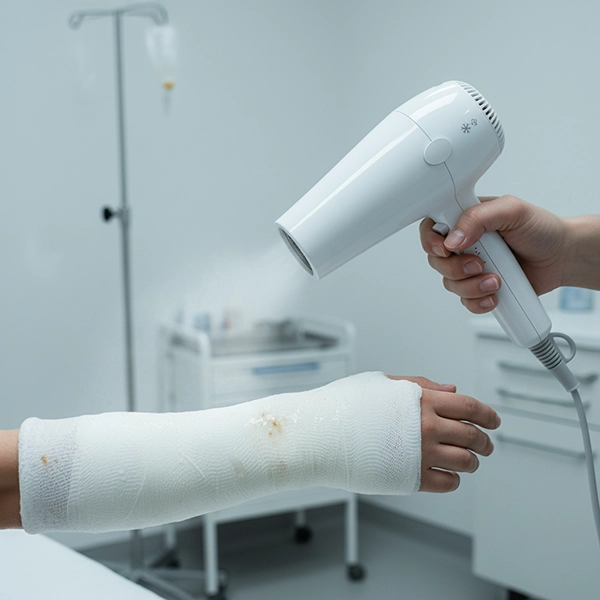
  2. Use a cool-air dryer or gentle airflow; never heat.
  3. Check for soft spots, odor, discharge; if present, contact your clinician.

Safely drying a fiberglass cast with cool airflow after incidental moisture exposure

Red Flags After Water Exposure

  • Severe/worsening pain, numbness/tingling, cold or color change of digits.
  • Drainage, foul odor, warm/wet spots with fever or burning skin pain.
  • Cracks/softening or sudden looseness of the cast.

Seek urgent care if any of these occur.

Conclusion & CTA

With a proper waterproof cover and short exposure, showering can be feasible; swimming should be limited to medically cleared scenarios with submersion-rated covers. For high-quality fiberglass orthopedic cast bandages and technical guidance, visit our product page.