
Wrist and thumb injuries are among the most common orthopedic conditions encountered in daily activities, occupational incidents, and sports. In many cases, full rigid immobilization is unnecessary and may delay functional recovery. Soft cast using a semi-rigid spica technique provides an effective balance between stability and controlled mobility.
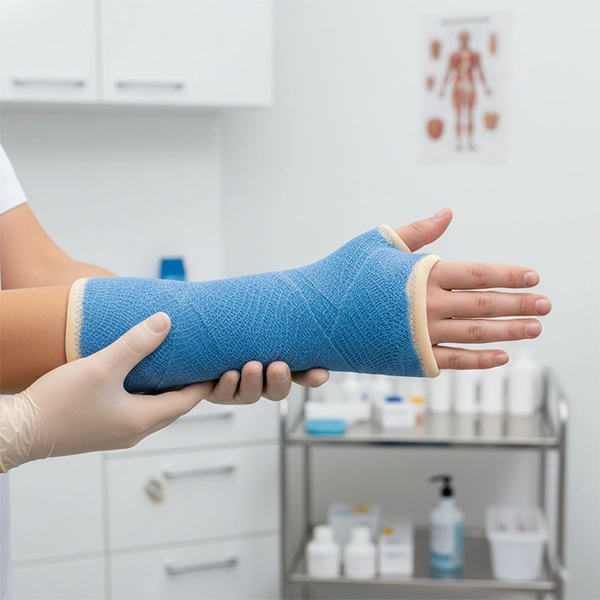
Soft cast is commonly used for mild to moderate ligament sprains, soft tissue injuries, and selected stable fractures of the wrist and thumb. The main goal is to limit harmful motion while maintaining functional positioning.
The spica technique involves immobilizing the thumb along with the wrist. Using a semi-rigid soft cast allows stabilization of the thumb in a functional position while preserving controlled movement of the remaining fingers.
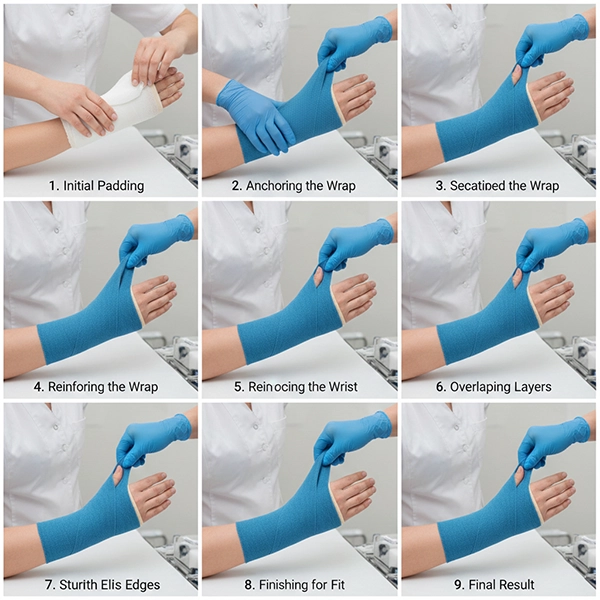
After skin preparation, a light protective underlayer is applied. The soft cast is then wrapped in a spiral pattern from the wrist toward the thumb, maintaining thumb abduction at approximately 30–45 degrees. Typical immobilization duration ranges from 10 to 21 days.
Compared with rigid casts, soft casts are lighter, breathable, and reduce the risk of joint stiffness and muscle atrophy. They also allow easier adjustment as swelling subsides.
Semi-rigid spica soft casting is not recommended for unstable fractures, severe ligament injuries, or cases requiring absolute immobilization.
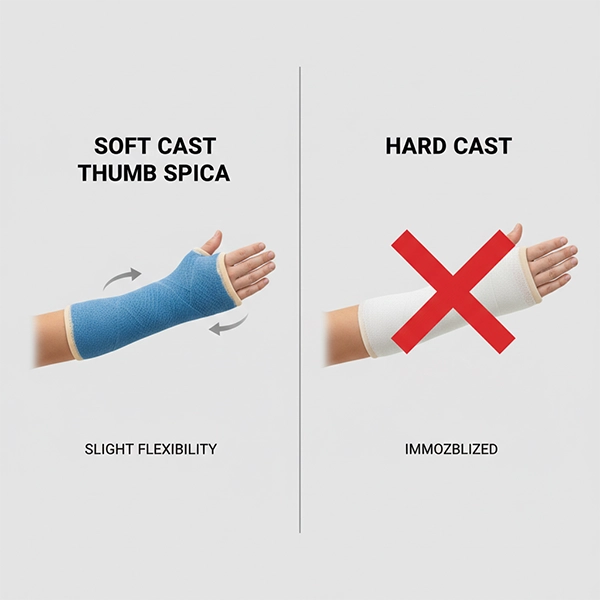
Soft cast with a semi-rigid spica technique is a clinically sound and patient-friendly option for managing selected wrist and thumb injuries. Proper patient selection and accurate technique are essential for optimal outcomes.
Explore available soft cast products for clinical applications:
View Fiberglass Cast Products