Soft Cast for Children: Comfort, Safety, and Parent Guidance
When a child gets a bone or ligament injury, parents worry not only about healing—but also comfort, itch control, skin safety, and emotional calm at home. Soft cast as a semi-rigid immobilization option can be suitable for many stable pediatric injuries because it is lighter, more breathable, and often better tolerated than rigid casts. This guide covers practical comfort, safety, and parent-focused behavioral tips during soft cast use.
Why soft cast can be a good choice for children
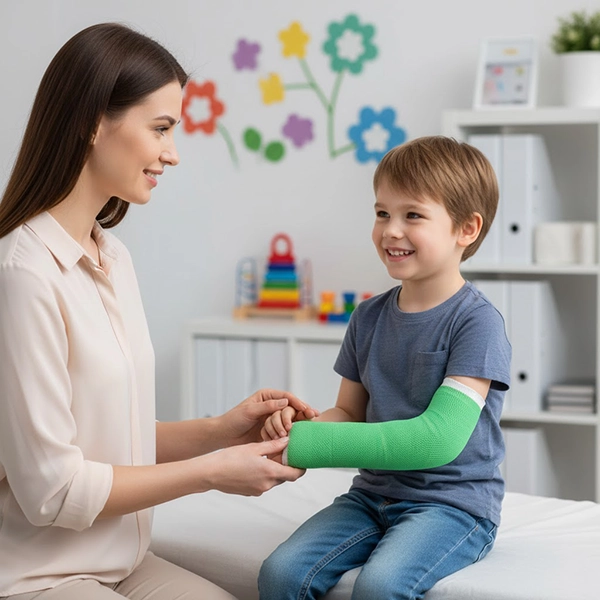
Children are naturally active and often struggle with long rigid immobilization. Soft casts are lighter and typically feel less irritating due to improved breathability. In selected cases, they can support earlier safe functional activity—always under clinician guidance.
Safety first: when soft cast is not appropriate
- Unstable or displaced fractures
- Severe ligament injury with clear instability
- Unusual escalating pain, numbness, or color changes in fingers/toes
- High risk of non-adherence (excessive picking, unsafe play)
Daily care for comfort and skin safety
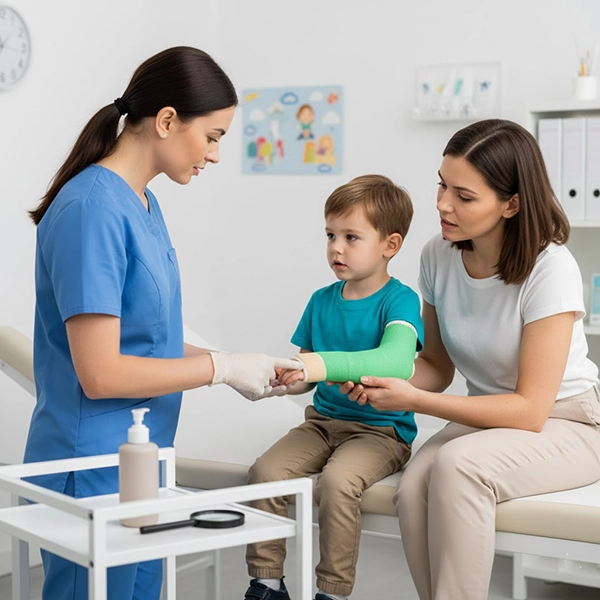
- Keep it dry: If drying is needed, use cool-air only.
- Itch management: Never insert objects under the cast; use cool air.
- Edge care: Edges are common irritation zones; seek care for severe redness or sores.
- Keep out sand/dust: Outdoor play can introduce debris and cause abrasions/infection.
Red flags: when to seek urgent medical care
- Persistent crying or unusual irritability that does not improve
- Severe finger swelling, bluish/purple discoloration, coldness
- Numbness, tingling, or inability to move fingers
- Bad odor, discharge, wet spots, or fever
- Severe pain, especially at night
Behavioral guidance for parents
- Simple rules: Explain clearly why the cast must not be picked or scratched under.
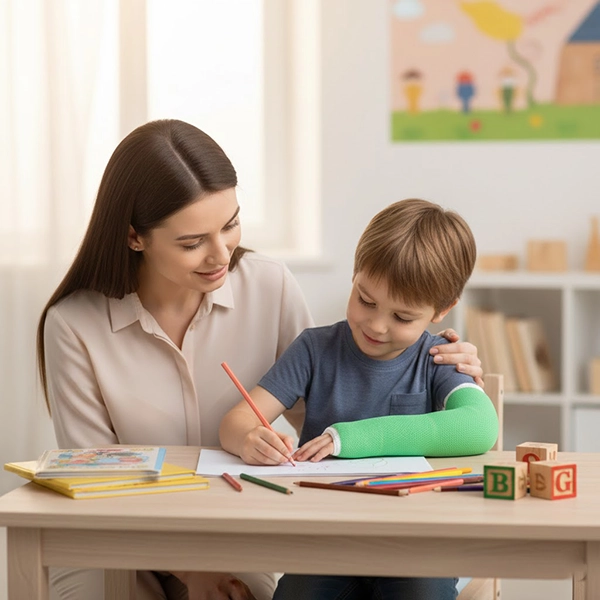
- Healthy distractions: Board games, drawing, story time, and calm activities help.
- Small rewards: A simple reward system can reinforce safe behavior.
- Sleep support: Cool air and repositioning can help reduce nighttime itch.
Duration and follow-up
Duration depends on injury type and clinician decision. A follow-up visit within 3–7 days is often important to reassess swelling, fit, and skin condition. Any loosening, cracking, or deformation should be checked promptly.
Conclusion
For many stable pediatric injuries, soft cast can be a more comfortable alternative to rigid casting. Success depends on correct indication, careful skin care, early recognition of red flags, and supportive parent-led behavior management.
Call to Action
Explore fiberglass cast products suitable for clinical and pediatric use:
View Fiberglass Cast Products