
Ankle sprains are among the most common musculoskeletal injuries, frequently occurring during sports and daily activities. In Grade I–II injuries, treatment focuses on pain and swelling control while preserving safe joint mobility. Soft cast, as a semi-rigid immobilization method, has become a clinically sound alternative to traditional rigid casts.
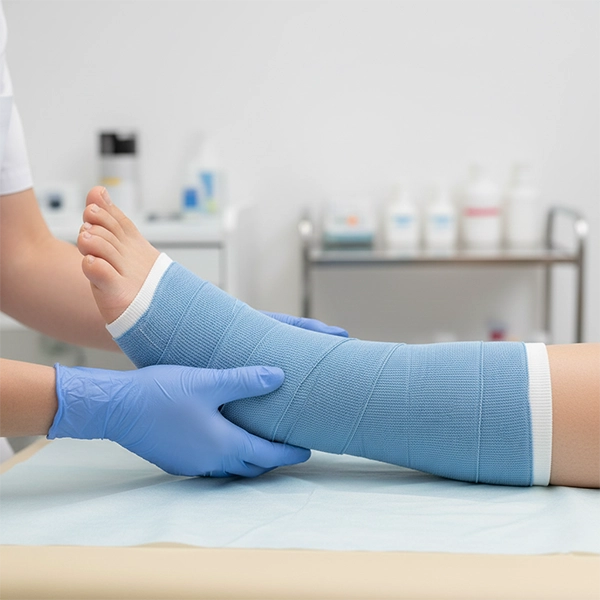
Grade I sprains involve mild ligament stretching without complete rupture, while Grade II injuries include partial ligament tears with moderate pain and swelling. In both cases, complete immobilization is usually unnecessary and may delay functional recovery.
Soft cast is a water-activated, semi-rigid orthopedic bandage that provides stability while allowing controlled movement. This balance between support and flexibility makes it ideal for managing mild to moderate ankle sprains.
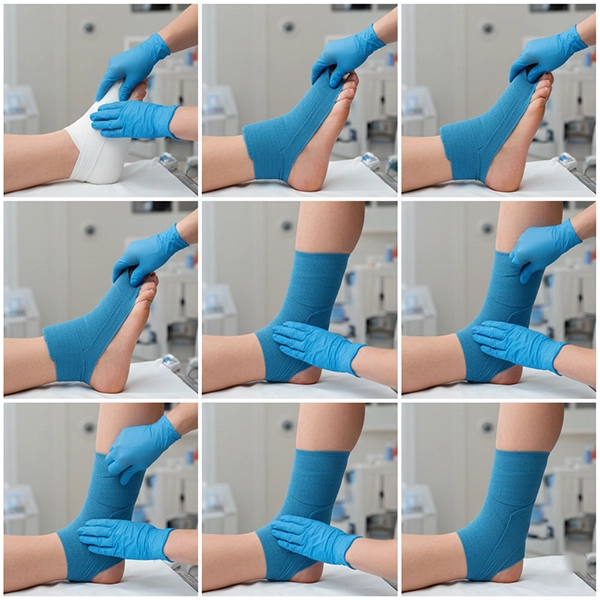
After initial swelling control using the RICE protocol, soft cast is typically applied in a U-shaped or figure-of-eight configuration with the ankle in a neutral position. Immobilization usually lasts 7–14 days, depending on clinical response.
Soft casts are lighter, more breathable, and reduce the risk of muscle atrophy. They allow easier clinical reassessment and adjustment, and patients can resume light daily activities sooner compared to rigid casts.
In Grade III sprains, associated fractures, or clear joint instability, soft cast alone is insufficient. Rigid immobilization or advanced fixation methods should be considered.
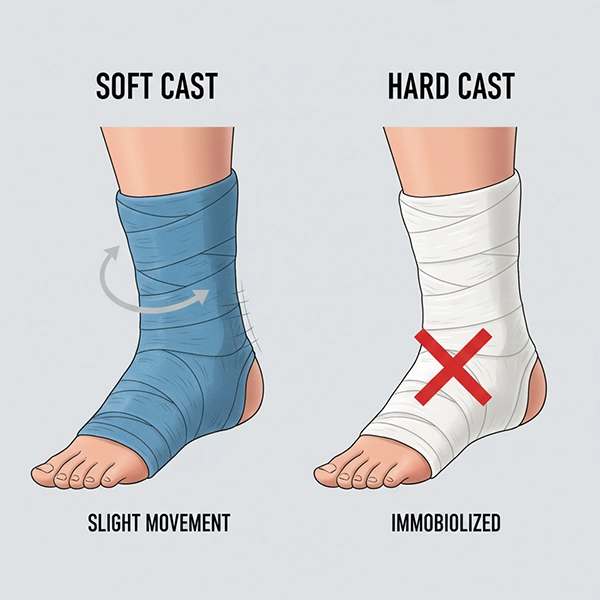
Soft cast is an effective, patient-friendly solution for Grade I–II ankle sprains. When applied correctly and for the right indications, it accelerates recovery while preserving joint function.
For professional consultation or access to high-quality soft cast products, contact our team:
Contact & Clinical Consultation