Quality Control Tests for Fiberglass Cast Tape: Set Time, Strength, Water Uptake
Quality control of fiberglass casting tapes directly impacts patient safety, clinical performance, and export readiness. Three core parameters with the highest clinical relevance are set/cure time, mechanical strength (tensile/flexural/interlaminar), and water uptake. This guide outlines test methods, suggested acceptance targets, and practical interpretation tips.
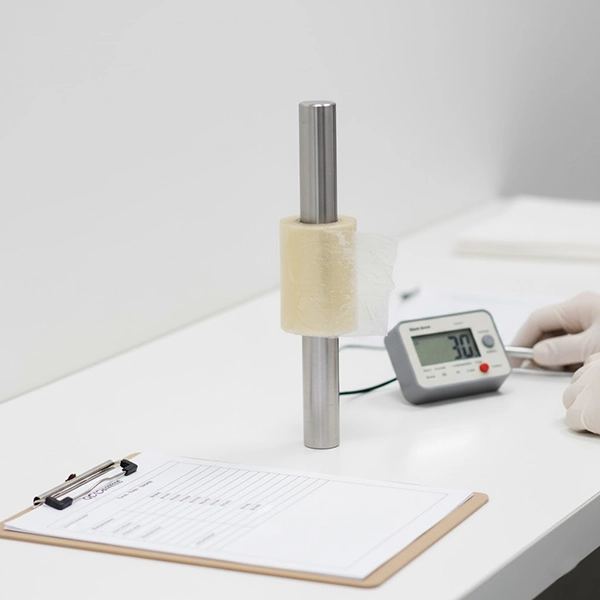
1) Set/Cure Time
Purpose: ensure sufficient handling/molding window without premature or delayed gel.
- Specimen prep: standard strip (e.g., 5cm × 60cm); dip once in temperature-controlled lukewarm water (e.g., 22–24°C), gently squeeze excess.
- Method: start timer at water exit; record gel time (loss of mobility) and handling-free time (surface holds shape).
- Suggested targets: gel 2–4 min; handling-free 5–8 min (resin grade and temperature dependent).
- Process controls: sensitivity to temperature/humidity, impregnation uniformity, batch-to-batch repeatability.
2) Mechanical Strength (Tensile/Flexural/Interlaminar)
Purpose: durable immobilization under daily loads without cracking or looseness.
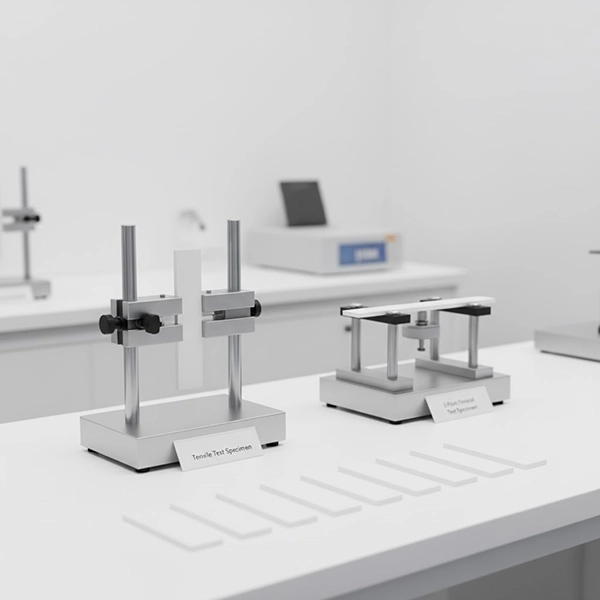
- Layup: fixed layer count (e.g., 6 layers, ~50% overlap) on a flat/mandrel; cut coupons after full cure.
- Tensile: record ultimate strength, initial modulus, elongation at break.
- Flexural: 3- or 4-point bend; report modulus, strength, and spring-back.
- Interlaminar bonding: peel/shear to evaluate resin layer integrity.
- Targets: define internal minimums vs. product benchmark; maintain low CV% across replicates.
3) Water Uptake & Moisture Stability
Purpose: minimize moisture ingress to reduce odor, soft spots, and skin irritation.
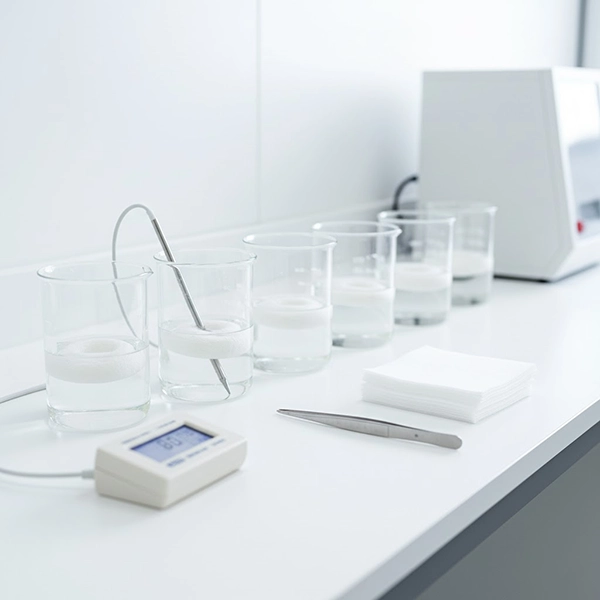
- Dry mass (W₀): dry the cured specimen to constant weight and record W₀.
- Immersion: submerge at controlled temperature (e.g., 23±2°C) for a fixed period (e.g., 24h); gently blot and record W₁.
- Formula: Water uptake (%) = (W₁ − W₀) / W₀ × 100.
- Post-wet check: quick mechanical screen or visual check for softening/delamination.
- Targets: low uptake and retained mechanical integrity per internal export-grade specs.
4) Sampling Plan, Acceptance & Reporting
- Sampling: by batch size (internal AQL); at least triplicates per test.
- Acceptance: defined USL/LSL per parameter, clear pass/fail rules.
- Reporting: environment logs, method details, control charts (X̄–R), and CAPA if nonconforming.
Conclusion & CTA
Routine control of set time, strength, and water uptake delivers consistent quality and clinical confidence. For help designing a plant-level QC plan or validation, contact our team.