
Choosing between polyester orthopedic cast bandage and fiberglass orthopedic cast bandage directly impacts patient comfort, immobilization quality, and follow-up imaging. While both are synthetic casting options, they differ in fiber type, strength-to-weight ratio, radiolucency, handling, and cost. This article compares them across material structure, clinical performance, care, and economics to support informed decisions.
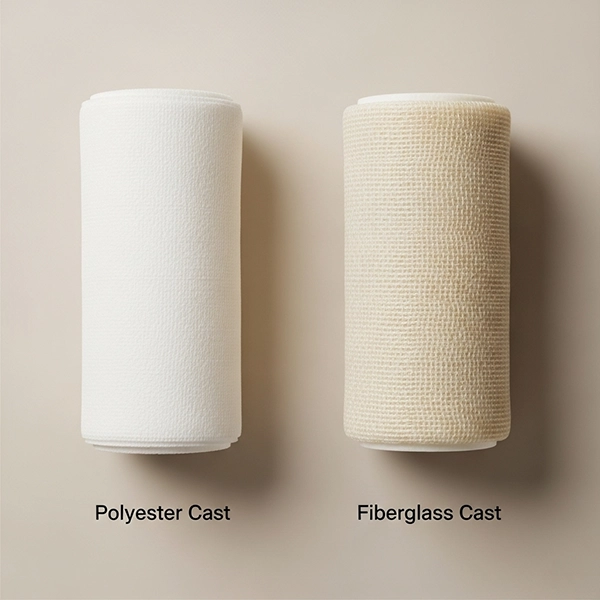
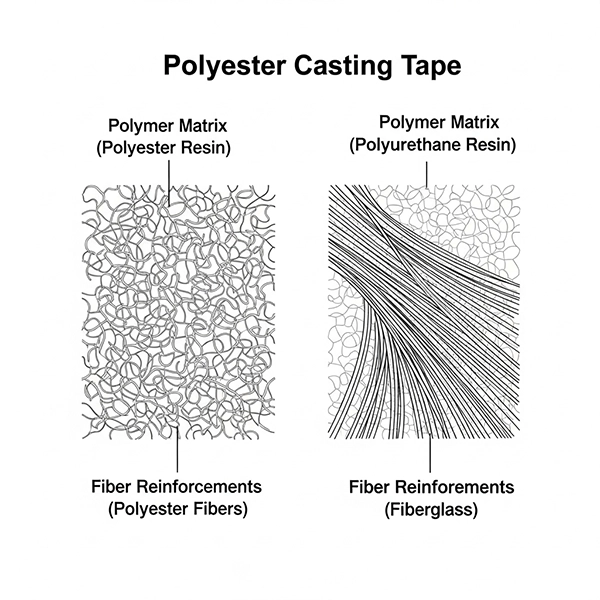
Fiberglass casts use woven glass fibers impregnated with water-activated resins, yielding high stiffness and an excellent strength-to-weight ratio after curing. Polyester casts use knitted polyester fabrics with similar reactive resins; they cure to adequate rigidity but differ in density and mechanical response compared with fiberglass.
Key differences summarized:
| Metric | Polyester Cast | Fiberglass Cast |
|---|---|---|
| Weight | Slightly heavier at similar rigidity | Lighter with higher stiffness |
| Strength & Durability | Adequate for general immobilization | Very high; suitable for prolonged/active use |
| Breathability & Comfort | Good | Very good with uniform porosity |
| Radiolucency | Acceptable | Better; facilitates follow-up imaging |
| Set/Cure Time | Moderate; longer working time | Faster; time-efficient in clinic |
| Water & Abrasion Resistance | Good | Very good |
| Cost | Generally more economical | Generally higher |
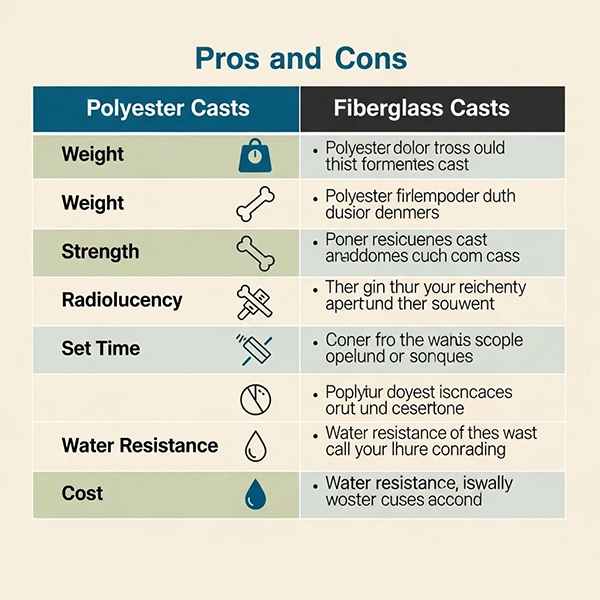
Fiberglass casts offer lower weight, higher strength, and better radiolucency—often the first choice clinically—while polyester casts remain a cost-effective, workable option for standard immobilization. Final selection should consider fracture type, imaging needs, patient activity, and budget.