
فارسی
Behsoshafa logo

Orthopedic Casting Equipment Checklist (POP & Synthetic Fiberglass)

Successful casting depends on clinical skill and a complete, ready-to-use checklist of supplies. Your kit should cover both POP (plaster of Paris) and modern synthetics like fiberglass casting tape. Below is a practical, clinic-tested equipment checklist with storage tips and a step-by-step workflow to keep casting safer, cleaner, and faster.

Prepared casting tray with essential supplies for a clean start

Core Casting Equipment Checklist

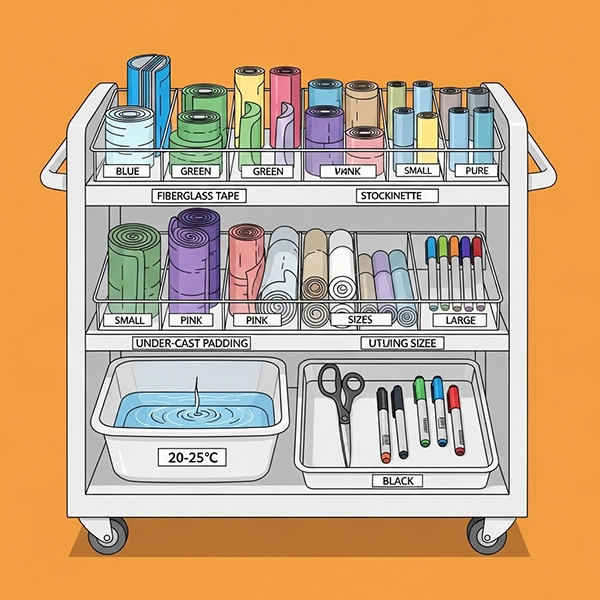
  • POP plaster bandages or synthetic fiberglass (water-activated): 2, 3, 4, 5-inch widths.
  • Stockinette: 5, 7, 9 cm; skin-contact liner.
  • Undercast padding: cotton or synthetic (7.5, 10, 12.5 cm) to protect bony prominences.
  • Edge finishing: moleskin, hypoallergenic tape to tidy edges.
  • Water basin (20–25°C): for activating fiberglass; simple thermometer helps.
  • Gloves/apron: hygiene and safety.
  • Scissors/cutters: Lister bandage scissors, cast shears, edge trimmers.
  • Molding aids: hand roller/smoother, sponge for uniform layers.
  • Marker, tape measure, angle tools: for alignment and length checks.
  • Thermoplastic splints (optional): short-term immobilization and customization.
  • Cast saw & vacuum (for removal): plus eye/ear protection.
  • Silicone/foam pads: for heels, malleoli, epicondyles, etc.
  • Disinfectant, drapes, waste bag: environmental control.

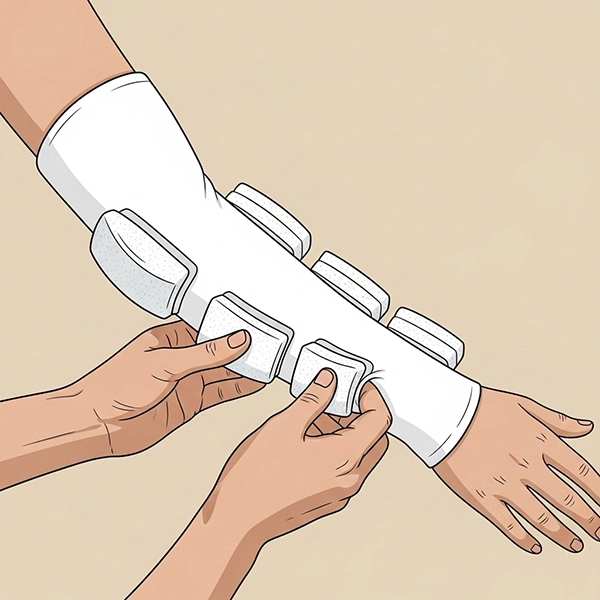
Proper skin protection with padding and stockinette before casting

Skin Prep & Safety

  • Stockinette: smooth, wrinkle-free, full coverage of target area.
  • Padding: at least 2–3 wraps with extra over bony landmarks; avoid pressure ridges.
  • Hypoallergenic tape/moleskin: clean edges, reduced friction.
  • Team safety: gloves, apron, and eye protection during cutting/removal.

Fiberglass-Specific Tips

  • Before opening, the roll should feel soft/pliable; a stiff roll indicates degraded quality.
  • Use water at 20–25°C; brief dip, gentle squeeze, controlled wrap tension.
  • Avoid circular strangulation pressure; mold & smooth for structural integrity and breathability.
  • Finish edges with padding/moleskin to protect the skin.

Step-by-Step Workflow

Pre-Cast

  • Verify prescription, choose POP vs fiberglass, select width/length.
  • Neurovascular check (pulse, sensation, movement) and remove jewelry.
  • Lay out stockinette, padding, tools, water basin; adjust cart height.

Fully stocked casting cart with fiberglass rolls, stockinette, padding, water basin and cutting tools

During Cast

  • Maintain anatomical alignment; control swelling; avoid high-pressure points.
  • 50% overlap per layer; consistent molding; maintain ventilation of layers.
  • Recheck N/V status after initial set.

Post-Cast

  • Edge finish and clean-up; patient education (keep dry, warning signs).
  • Record material type, widths, layer count, joint angles.

Storage & Inventory

  • Fiberglass: 15–30°C, RH < 60%, away from light/moisture; FIFO; roll pliability matters.
  • POP: store cool and dry; protect from vapor and humidity.
  • Expiry: fiberglass typically up to 3 years from DOM; heed unusual odor/brittleness.

Conclusion & CTA

With a complete checklist and good technique, casting becomes safer, faster, and more consistent. For high-quality fiberglass casting tape and professional casting supplies, visit our Behsou Shafa product page.