
فارسی
Behsoshafa logo

Fiberglass Cast Performance in Hot & Humid Climates

Working with fiberglass casting tapes in hot and humid regions—Persian Gulf, Middle East, Southeast Asia—poses unique challenges. Ambient temperature and relative humidity influence set/handling time, moldability, interlaminar bonding, and patient comfort. This guide details environmental effects, practical adjustments at the point of care, and patient after-care tips to ensure reliable immobilization.

Applying a fiberglass cast in a hot, humid clinic; controlled lukewarm water and a timer to manage set time

1) Temperature & Humidity Effects on Set/Handling Window

  • Temperature: warmer ambient and activation water shorten the gel window; use controlled lukewarm water (e.g., 20–24°C).
  • Relative humidity: high RH increases pre-use moisture pickup and may cause uneven cure; keep rolls sealed until use.
  • Practical notes: adjust roll length/layer count in heat; consider shorter rolls for small segments to preserve working time.

2) Application Technique in Hot & Humid Settings

  • Activation: one quick dip; gently express excess water—avoid prolonged soaking.
  • Timing: keep a timer; shape critical edges and bony contours first.
  • Tension & overlap: 30–50% overlap with uniform tension; avoid pressure ridges.
  • Gloves & ventilation: thin non-latex gloves and mild airflow to reduce palm sweat and slippage.

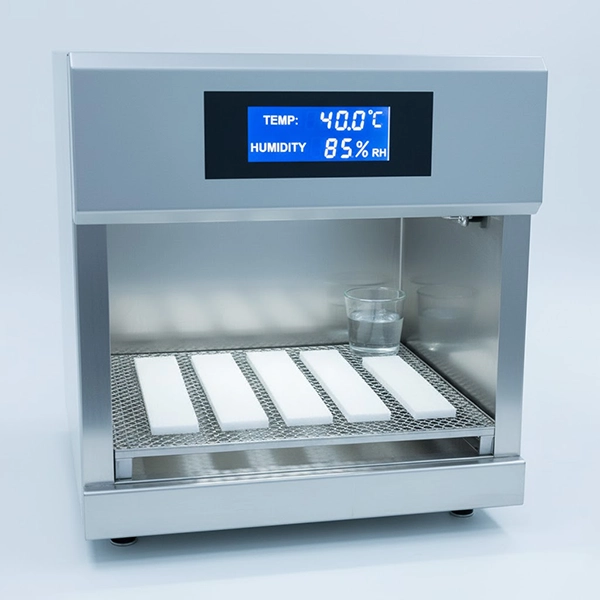
Environmental chamber testing of fiberglass cast coupons at controlled temperature and humidity

3) Packaging, Storage & Transport in Tropical Conditions

  • Low-MVTR foil pouches: reliable moisture barrier with uniform heat seals.
  • Desiccant: in the secondary carton (no direct contact with the roll) with a clear “do not eat” note.
  • Storage: 15–30°C and RH <60%; away from sunlight/heat; dry pallets and ventilated warehousing.
  • Acclimatization: allow brief room-temperature rest prior to use to minimize thermal/moisture shock.

4) Patient Comfort & Skin Care

  • Sweat & odor: breathable fiberglass helps, but high RH increases sweating; keep skin around edges clean and dry.
  • Bathing: use a proper waterproof cast cover; if wet, blot and cool-air dry.
  • Edge protection: moleskin around edges to reduce friction/itch.
  • Clothing & activity: breathable cotton garments and low-risk activity; avoid direct heat exposure.

5) Red Flags & Common Pitfalls

  • Too-fast or too-slow set (loss of moldability or prolonged soft spots)
  • Foul odor, marked itching, discharge, or skin irritation
  • Unusual swelling, escalating pain, numbness, or discoloration of digits
  • Sharp edges, pressure ridges, or irregular overlaps

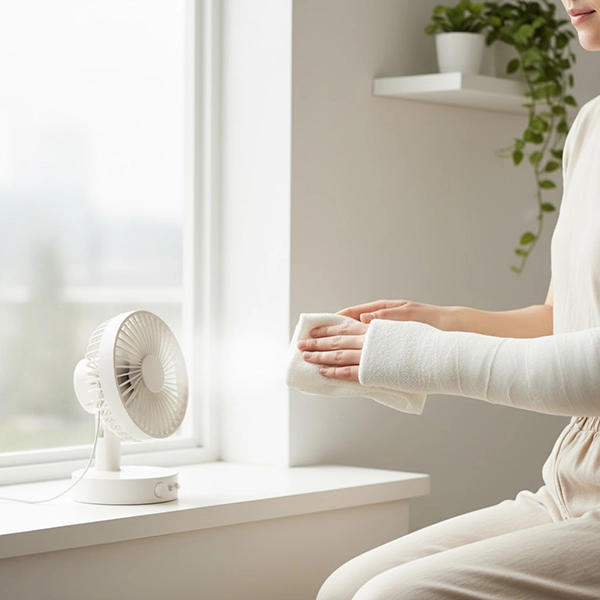
Daily care of a fiberglass cast in humid climates; gentle drying and natural ventilation to reduce sweat

Conclusion & CTA

With controlled water temperature, precise timing, compliant storage, and patient education, fiberglass casts perform reliably even in hot and humid climates. For tailored protocols and clinician training, please contact our team.