
فارسی
Behsoshafa logo

Color-Changing Cast Bandages for Clinical Alerts: From Fiberglass to Smart Indicators

After casting, early detection of issues such as under-cast moisture, skin infection, hot spots, or excessive pressure is critical. New cast bandages with color-changing indicators respond to moisture, temperature, pH, and pressure, offering visual cues to patients and clinicians. Integrating these indicators into fiberglass casting tape elevates care from manual checks to smart visual monitoring.
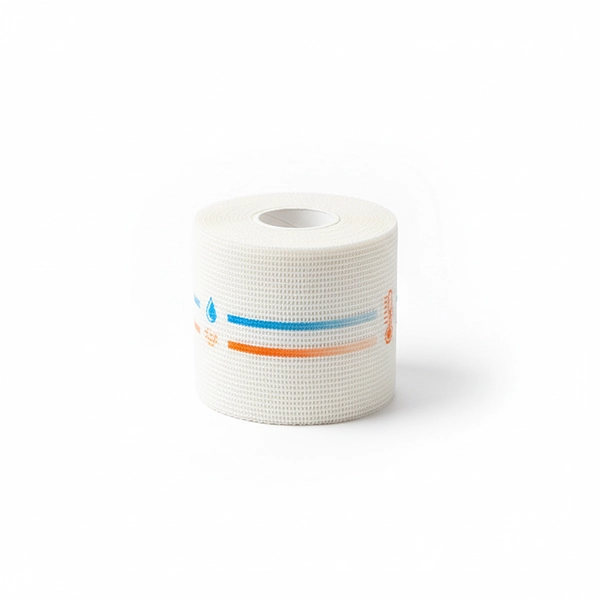
Fiberglass cast bandage with integrated color stripes for moisture and temperature indication on a white background

How Do Color-Changing Indicators Work?

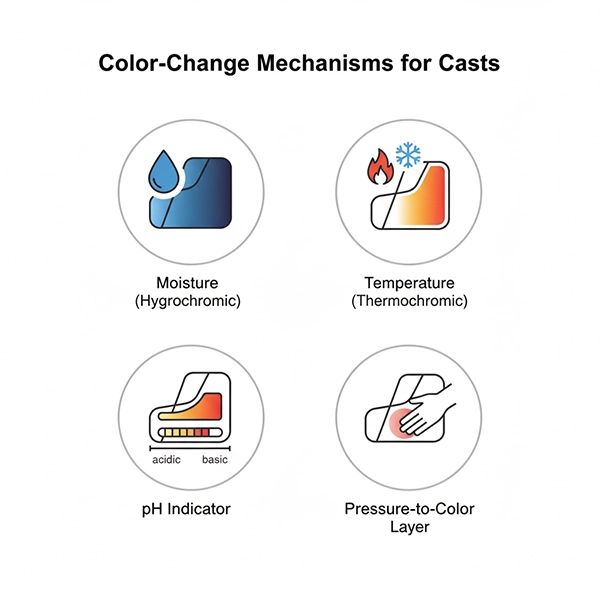
  • Moisture sensors: Hygrochromic dyes shift color upon water ingress—early alert for wet padding.
  • Temperature sensors: Thermochromic pigments flip at preset thresholds (e.g., 37–40°C)—warning for hot spots/overheating.
  • pH sensors: Indicators react to alkaline/acidic exudates suggestive of infection risk.
  • Pressure sensors: Print layers that darken under prolonged pressure at bony prominences.

Infographic of color-indicator mechanisms on casts: moisture, temperature, pH and pressure

Benefits with Fiberglass Casts

  • Rapid visual monitoring by both patient and clinician.
  • Earlier intervention for moisture/pressure issues before skin injury.
  • Patient education made simple via easy “if color → action” rules.
  • Preserves fiberglass advantages: strength-to-weight, breathability, radiolucency.

Where They Shine Clinically

  • Pediatrics and geriatrics: reduce delays in reporting under-cast problems.
  • High-pressure areas: heels, malleoli, epicondyles, other bony prominences.
  • Post-operative casts: monitor exudates (pH/moisture) for early infection signs.
  • Heat risk scenarios: prevent thermal injury (e.g., hot dryers/heaters).

Design & Integration with Synthetic Tape

  • Surface stripes: printed/adhered on the final layer for easy reading.
  • Interlayer placement: closer to padding for sensitive moisture/pH detection.
  • Modular patches: ready-to-apply indicator pads for target hot spots.

Limitations & Safety

  • Calibration: alert thresholds must be clinically meaningful, minimizing false alarms.
  • Color stability: resistant to sweat, light, detergents, and time.
  • Biocompatibility: no direct skin contact; ensure ISO 10993 compliance.
  • Clinical judgment: indicators suggest—clinicians decide.

Patient Instructions: If Colors Change, Then…

  • Moisture → blue/purple: air-dry, cool airflow; if persistent wetness/odor → clinic visit.
  • Heat → red/orange: avoid heat; elevate; if pain/redness/fever → seek care.
  • pH → unusual green/yellow: suspect infection → prompt evaluation.
  • Pressure → darkening at spots: check edges/padding; if pain/numbness → clinic.

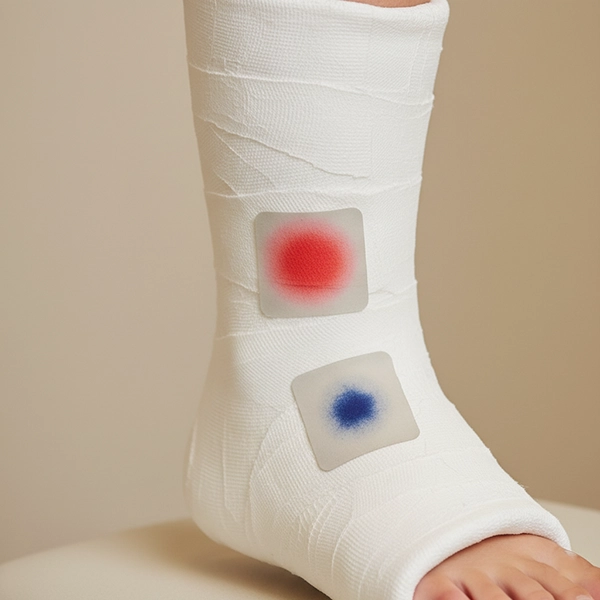
Close view of a heel area with pressure and moisture indicator patches on the final fiberglass cast layer

Storage, Lifetime & Regulatory

  • Storage: 15–30°C, RH < 60%; away from sunlight; roll should feel soft before use; respect expiry.
  • Service life: indicator function should match typical cast durations (4–8 weeks).
  • Standards: biocompatibility testing, sterilization stability (gamma/EO if applicable), and clinical validation.

Conclusion & CTA

Color-changing casts are a practical step toward smart immobilization. If you seek high-quality fiberglass casting tapes and are exploring visual indicator add-ons, visit our product page for technical options.