
Selecting the correct tape width and roll count for a fiberglass orthopedic cast bandage (synthetic, water-activated) directly affects immobilization quality and patient comfort. This clinic-focused guide maps recommended widths by limb/region, typical roll counts (assuming ~3.6 m / 4 yd per roll and 50% overlap), plus pro tips like step-down wrapping (narrower distally, wider proximally).
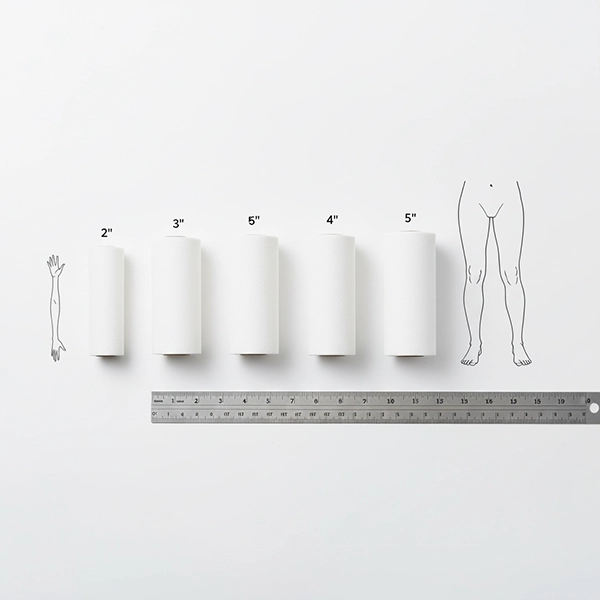
| Region | Recommended Width (in | cm) | Population | Approx. Rolls* | Notes |
|---|---|---|---|---|
| Thumb/Finger (Spica) | 2" (5 cm) | All | 1–2 | High curvature control; tidy edges with moleskin. |
| Hand/Wrist | 2"–3" (5–7.5 cm) | Peds/Adult | 1–2 | 2" offers finer handling around wrist curves. |
| Forearm (Short Arm Cast) | 3"–4" (7.5–10 cm) | Adult | 2–3 | Use 3" distally and 4" proximally (step-down) for neat finish. |
| Arm/Elbow (Long Arm Cast) | 4" (10 cm) | Adult | 3–4 | Uniform coverage across elbow; avoid creases. |
| Foot/Ankle (Short Leg Cast) | 4"–5" (10–12.5 cm) | Adult | 3–4 | For the arch, 3" can help contouring if needed. |
| Shank to Below-Knee | 4"–5" (10–12.5 cm) | Adult | 3–4 | 4" distally and 5" proximally looks cleaner. |
| Thigh/Long Leg Cast | 5"–6" (12.5–15 cm) | Adult | 4–6 | Consider 6" for large thighs. |
| Pedi Upper Limb | 2"–3" (5–7.5 cm) | Peds | 1–2 | Narrower widths reduce weight and improve control. |
| Pedi Lower Limb | 3"–4" (7.5–10 cm) | Peds | 2–3 | 3" around ankle/foot for precise shaping. |
*Assuming ~3.6 m (4 yd) per roll and 50% overlap; adjust for limb length and desired layer count.
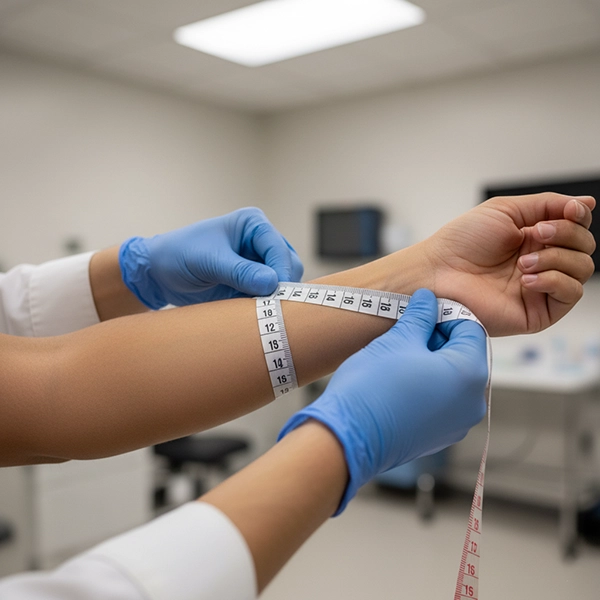
Example: Adult Short Arm: 25 cm coverage, 22 cm circumference, 3" (7.5 cm) width → ~7 turns; ~1.54 m per layer; 3 layers ≈ 4.6 m → ~2 rolls.
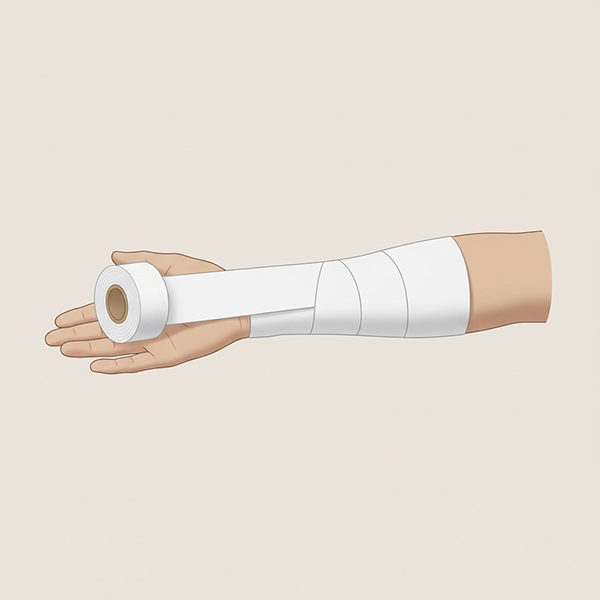
Right-sizing width and roll count boosts immobilization quality, breathability, and patient comfort. For high-quality fiberglass casting tape and export-grade synthetic cast bandages, visit our Behsou Shafa product page.