
Fiberglass orthopedic cast bandages have gained great popularity as a modern alternative to traditional POP casts due to their unique features and numerous advantages. These bandages not only reduce weight and increase patient comfort but also offer multiple benefits in performance and maintenance, leading to faster recovery and easier care. In this article, we provide a comprehensive overview of the advantages of fiberglass bandages over POP casts and important tips for their proper care.

Fiberglass bandages have numerous tiny pores that allow better air circulation. This feature reduces the risk of infection and skin irritation caused by prolonged use. Also, their high flexibility enables doctors to shape them more easily, which is very effective in healing the injured area.
Fiberglass bandages come in various colors and patterns, which can be psychologically more appealing and pleasant for patients. Furthermore, they reduce sweating under the cast significantly, preventing itching and unpleasant odors.

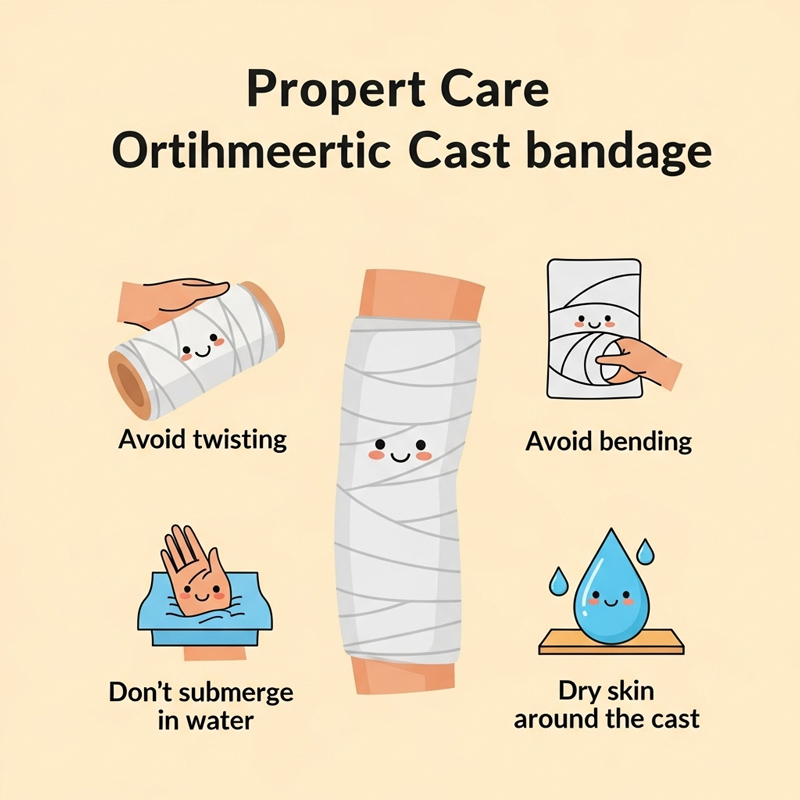
To properly care for fiberglass bandages, avoid applying strong pressure to the immobilized area to ensure proper healing. Also, avoid contact of hygiene products such as deodorants, lotions, and powders with the casted area. Dirt and sand entering the bandage can cause problems, so care should be taken.
If drying inside or outside the bandage is necessary, use a cool setting on a hairdryer, as high heat can damage the skin underneath. To relieve itching, do not use anti-itch creams under the bandage; instead, use a cool hairdryer. In case of damage or cracks, consult a doctor and avoid home repairs. Also, bandage removal must be done by a doctor, and self-removal is strongly discouraged.
Considering their lighter weight, higher strength, greater comfort, and breathability, fiberglass bandages are a better choice than POP casts for patients and doctors alike. Easier maintenance and reduced skin problems are additional benefits. Choosing fiberglass bandages for fracture stabilization can accelerate healing and improve patients' quality of life.