
فارسی
Behsoshafa logo

Using 3D Printing & 3D Scanning to Replace Traditional Casts

3D scanning and 3D printing are reshaping orthopedic immobilization. Instead of traditional POP or even some fiberglass casting tape use-cases, clinicians can capture limb geometry, design a ventilated lattice cast, and 3D print a patient-specific device. The result: improved fit, airflow, and a more modern care experience. This article outlines the workflow, benefits, limitations, and how to choose between traditional and printed solutions.
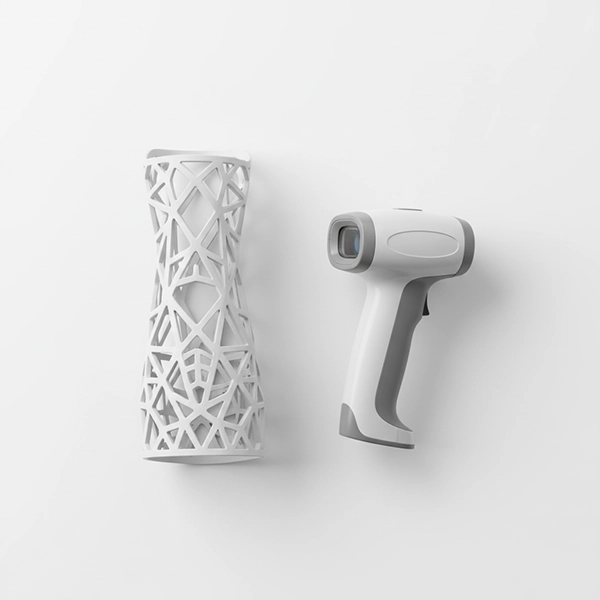
Cover: studio shot of a 3D-printed lattice cast next to a handheld 3D scanner on a white background

Digital Workflow: From Scan to Finished Cast

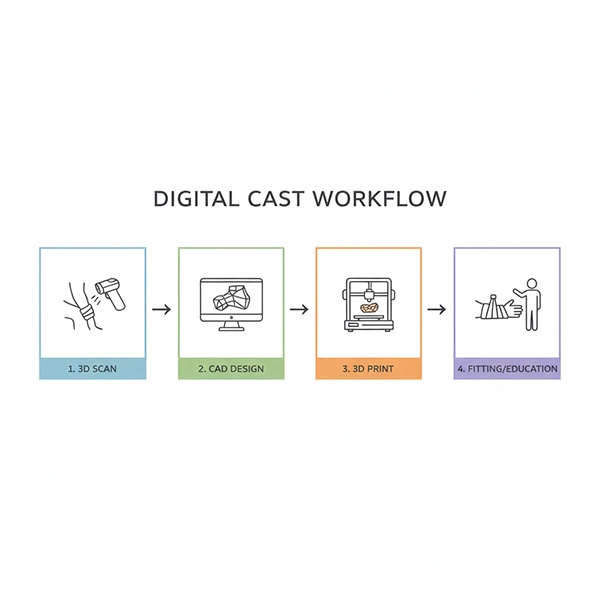
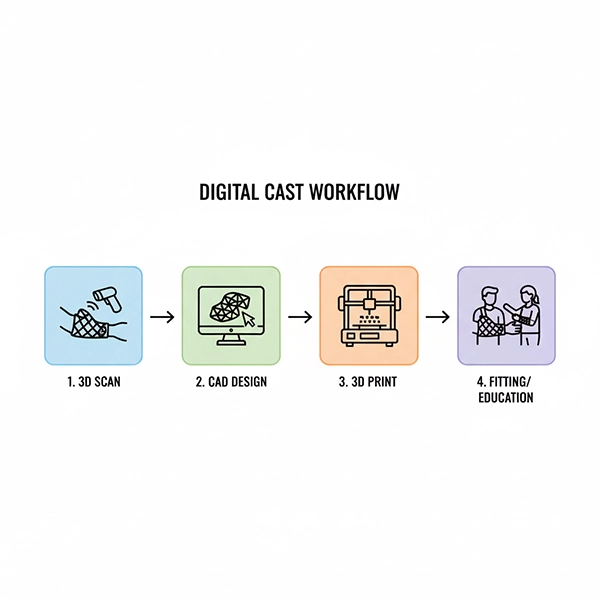
  • 3D Scan: capture full limb with a handheld/optical scanner; include joints and edge zones clearly.
  • CAD Design: smooth the mesh, set thickness, lattice pattern, and reinforcements; release pressure-prone areas.
  • 3D Printing: common materials include PA12, TPU, or engineered resins; choose by strength, weight, biocompatibility, and finish.
  • Fit & Finish: test on-limb, deburr edges, mount closures, and provide patient instructions.

Infographic: 3D scan ➜ CAD design ➜ 3D print ➜ fitting and patient education

Advantages over Traditional Bandaging

  • Ventilation & hygiene: lattice geometry reduces sweating, itching, and skin issues.
  • Fit & comfort: customized design reduces pressure points and overall weight.
  • Openable designs: two-piece casts can be opened for checks or physio.
  • Aesthetics & acceptance: modern look encourages adherence.
  • Repeatability: digital files enable redesign and reprint when needed.

Challenges & Considerations

  • Time & cost: scanning, CAD, and printing add lead time and expense.
  • Standards & durability: mechanical/biocompatibility testing, moisture/UV resistance, safe edges.
  • Clinical indications: not all fractures suit printed casts—final call rests with the clinician.
  • Service model: trained CAD/CAM team and disinfection protocol for printed hardware.

When Fiberglass Still Wins

  • Emergencies prioritizing speed, availability, and lower cost.
  • Temporary casts that need quick adjustments or stepwise re-evaluation.
  • Standardized, widely proven workflows less sensitive to digital steps.

How to Choose Between Options

  • Fracture/surgical profile: stability needs, immobilization duration, skin-pressure sensitivity.
  • Access & timeline: availability of scanning/printing and turnaround.
  • Budget/coverage: reimbursement and total cost of care.
  • Patient preference: hygiene, lifestyle, occupational needs.

Close-up of an adjustable 3D-printed mesh cast fitted on a forearm with easy-open closures

Conclusion & CTA

3D technologies open new horizons for custom casts, yet fiberglass casts remain advantageous in many routine and urgent scenarios. For case-by-case evaluation and choosing the right path (traditional vs. printed), contact us.